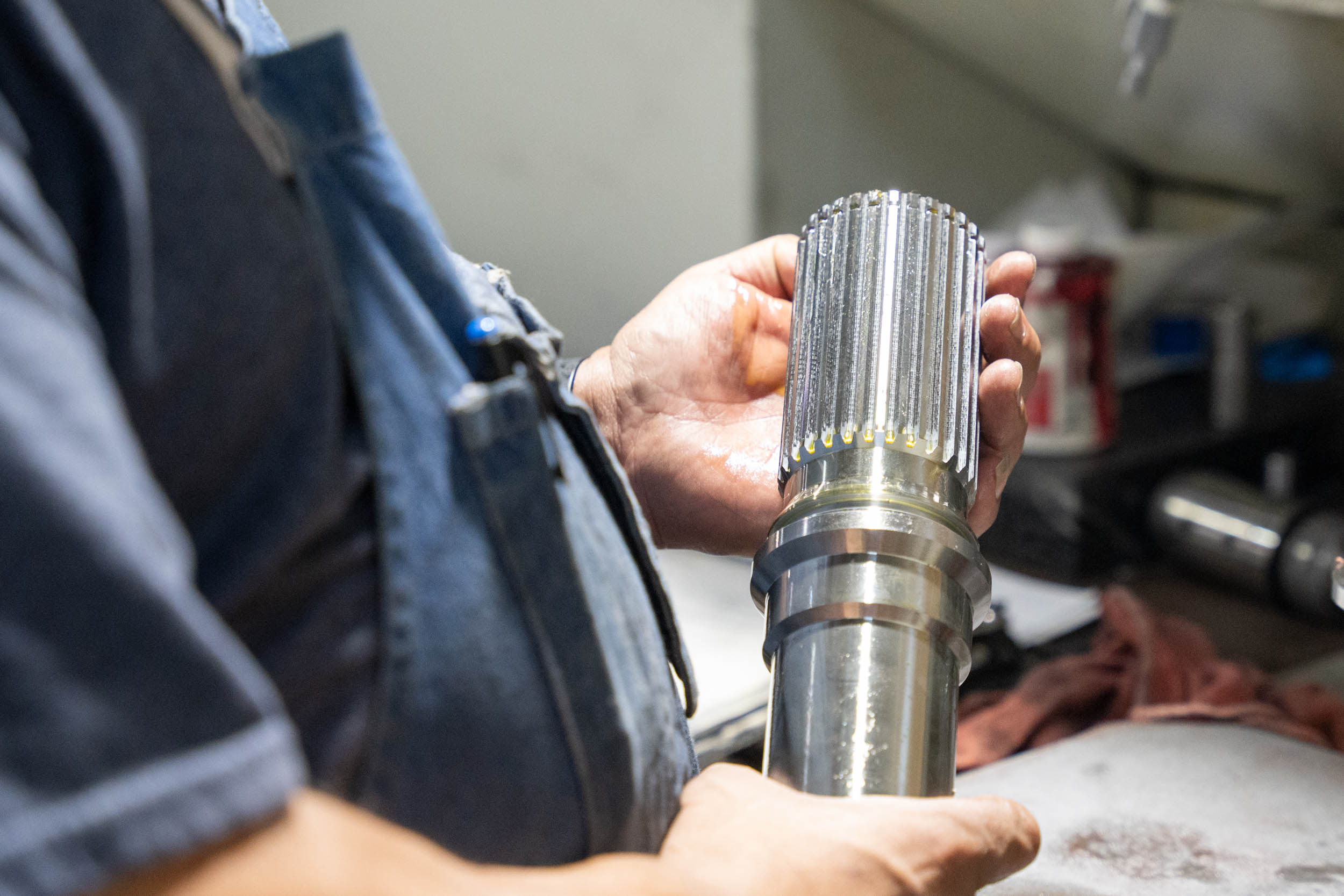
Cutting Tool Coatings Explained

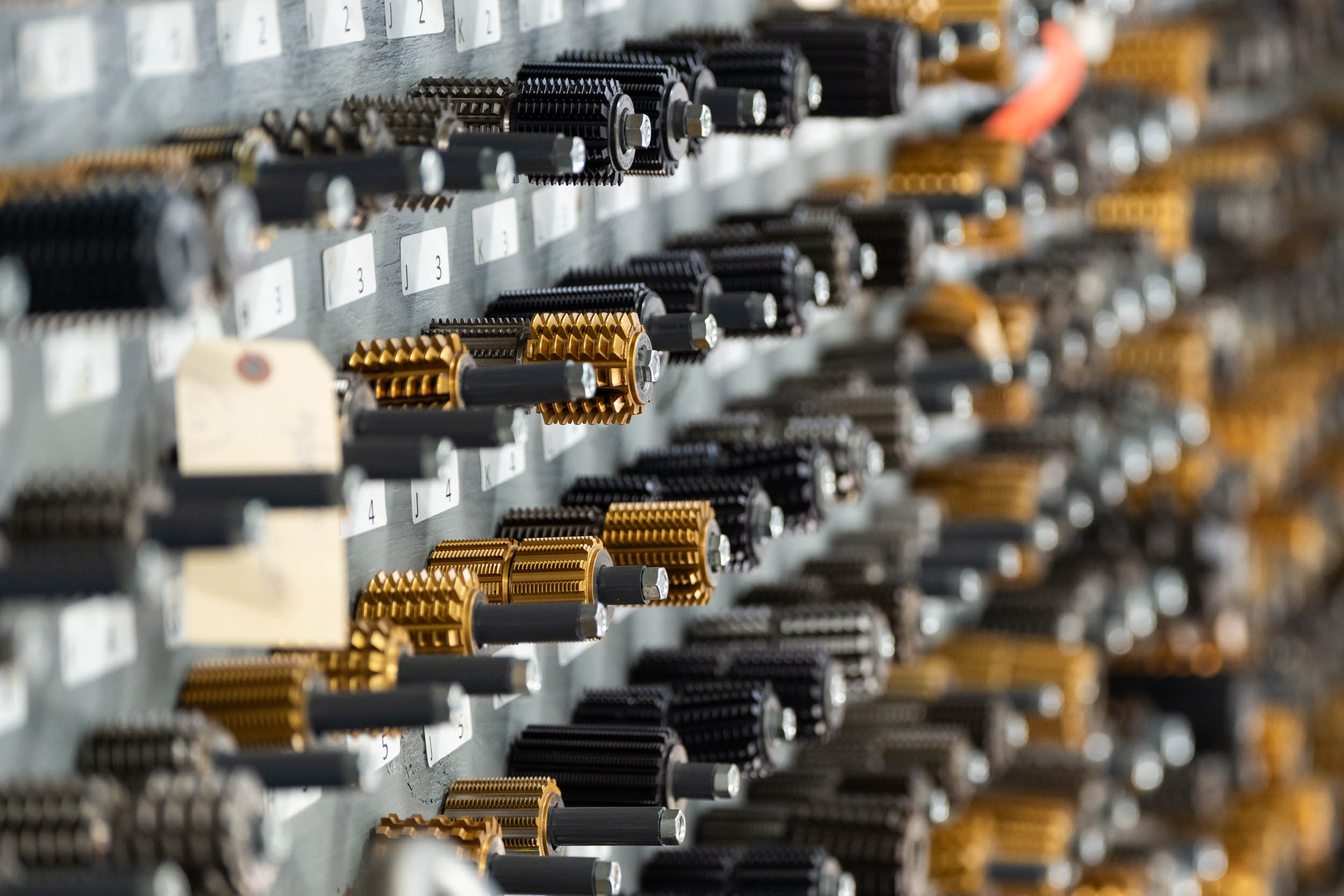
Every tool coating affects cycle time, tool life, and cost per part. Here's how to tell them apart and choose the right one.
Most shops don't think about their tool coating until it starts costing them money. It shows up as a hob wearing out sooner than it should, or needing regrinding more often than the schedule calls for, and nobody traces it back to the coating until the costs have already piled up. Dry hobbing raises the stakes. Run it with the wrong coating and the tool can wear out far faster than expected, because the substrate can't hold up to the heat at the cutting edge on its own. This Gear School guide covers what each cutting tool coating does and how to pick the right one for the job.
Out in the shop, cutting tool coatings range from bright gold to several shades of grey, and the right one for your work comes down to what you're cutting, how fast, and whether you're running wet or dry.
What does a coating actually do?
A cutting tool coating is a thin, hard layer applied to a cutting tool's surface. It's thin enough to measure in microns but hard enough to change how the tool performs. It insulates against heat, cuts down friction at the cutting edge, and resists wear far longer than the bare tool material would on its own.

The heat part matters more than it sounds. A tool coating's thermal conductivity runs lower than the tool material beneath it, so heat generated at the cutting edge stays in the chip instead of soaking into the tool. Less heat reaching the tool means less thermal stress on the edge, cut after cut.
Friction works alongside that. A coated edge typically runs with less friction against the chip than a bare one, so chips slide off instead of welding to the edge. That cuts down on the heat generated in the first place, on top of what the coating already keeps from transferring into the tool.
Wear resistance is where it comes together. Cutting tool coating hardness runs far higher than the hardness of the tool substrate underneath it, high enough that the coating takes the abrasive wear a bare edge would otherwise absorb directly. Shops can use that extra wear resistance for longer tool life at the same feeds and speeds, or for faster cutting at the same tool life.
PVD vs. CVD: does it matter which one coats your tool?
Yes, especially if the tool is high-speed steel. Every cutting tool coating in this guide is applied using PVD (physical vapor deposition), and that choice isn't incidental.
PVD runs at a process temperature under 500°C, well below the tempering temperature of high-speed steel. An HSS tool goes into the coating chamber and comes out without needing to be re-hardened, and without the risk of the original tool geometry distorting along the way. CVD, chemical vapor deposition, runs far hotter, close to 1,000°C, hot enough to anneal steel and soften a finished HSS tool. That's why CVD has stayed mostly in carbide insert coating, where the higher process temperature isn't a problem, while PVD is what protects an HSS hob or shaper cutter through the tool-coating process.
How do you pick the right cutting tool coating?
Four things drive the decision. What you're cutting, how fast you're cutting it, whether you're running wet or dry, and what the tool itself is made of.
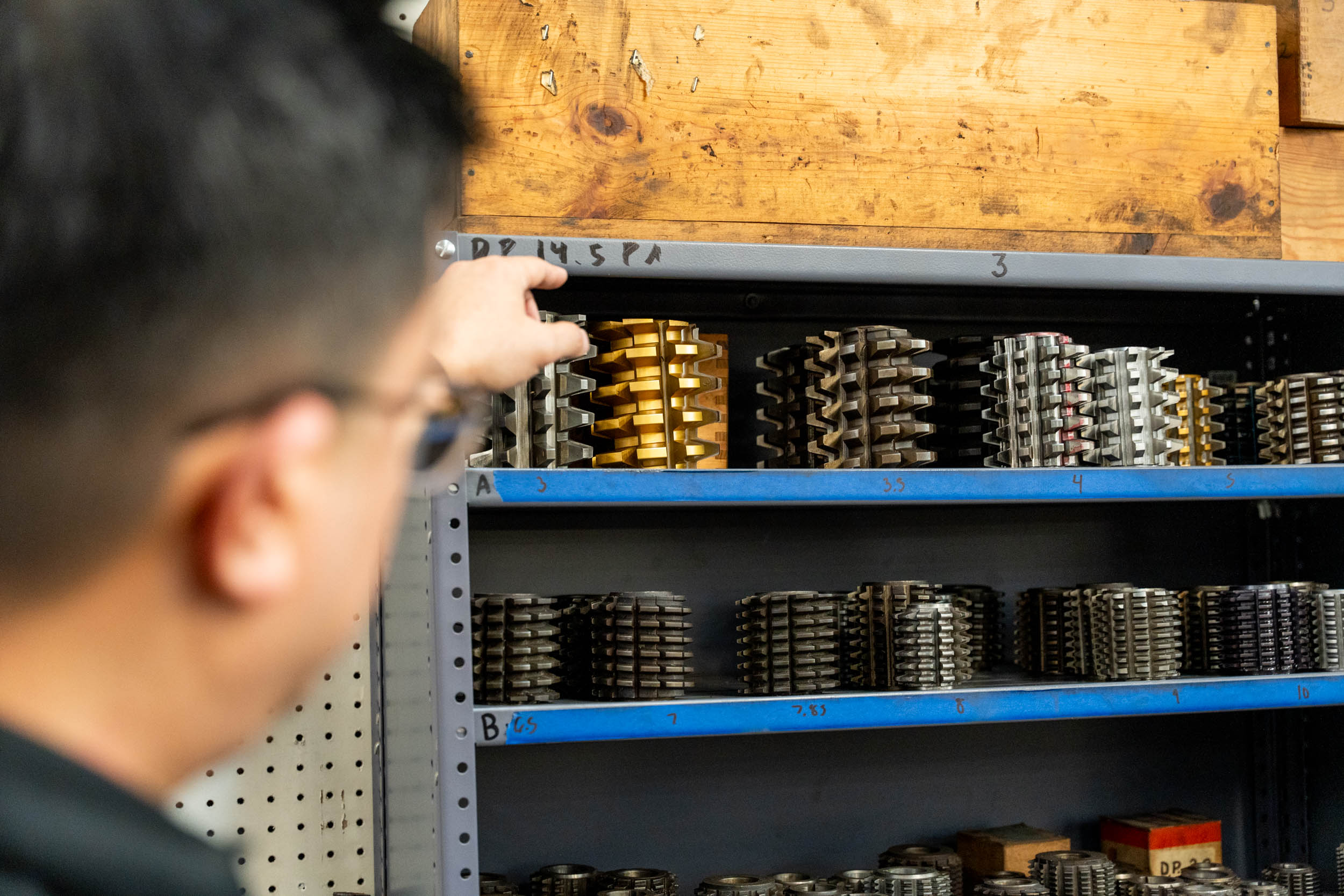
Material
Every coating in this guide works on the alloy steels most gear-cutting runs use. TiN still makes sense for lower-speed wet cutting where cost matters most. AlCrN, the chemistry behind Alcrona Pro, Alcrona EVO, and Altensa, handles harder steels and higher temperatures. Oerlikon Balzers rates Alcrona Pro for gear cutting in steel up to 52 HRC.
Cutting Speed
Altensa and Alcrona EVO are both built for high-speed, productivity-focused gear cutting. Alcrona EVO is also the coating we specify on most new tools.
Wet or Dry
This one has a clear technical answer. Dry cutting runs the cutting edge far hotter than wet cutting, and AlCrN and TiAlN coatings are built to hold up to that heat, which is why they're the recommended choice for dry hobbing over TiN. With coolant or cutting oil, any of the five coatings work, on HSS or carbide tools.
HSS or Carbide
This ties back to PVD itself. Because the process runs cool enough to protect HSS temper, every tool coating in this guide works on both HSS and carbide substrates.
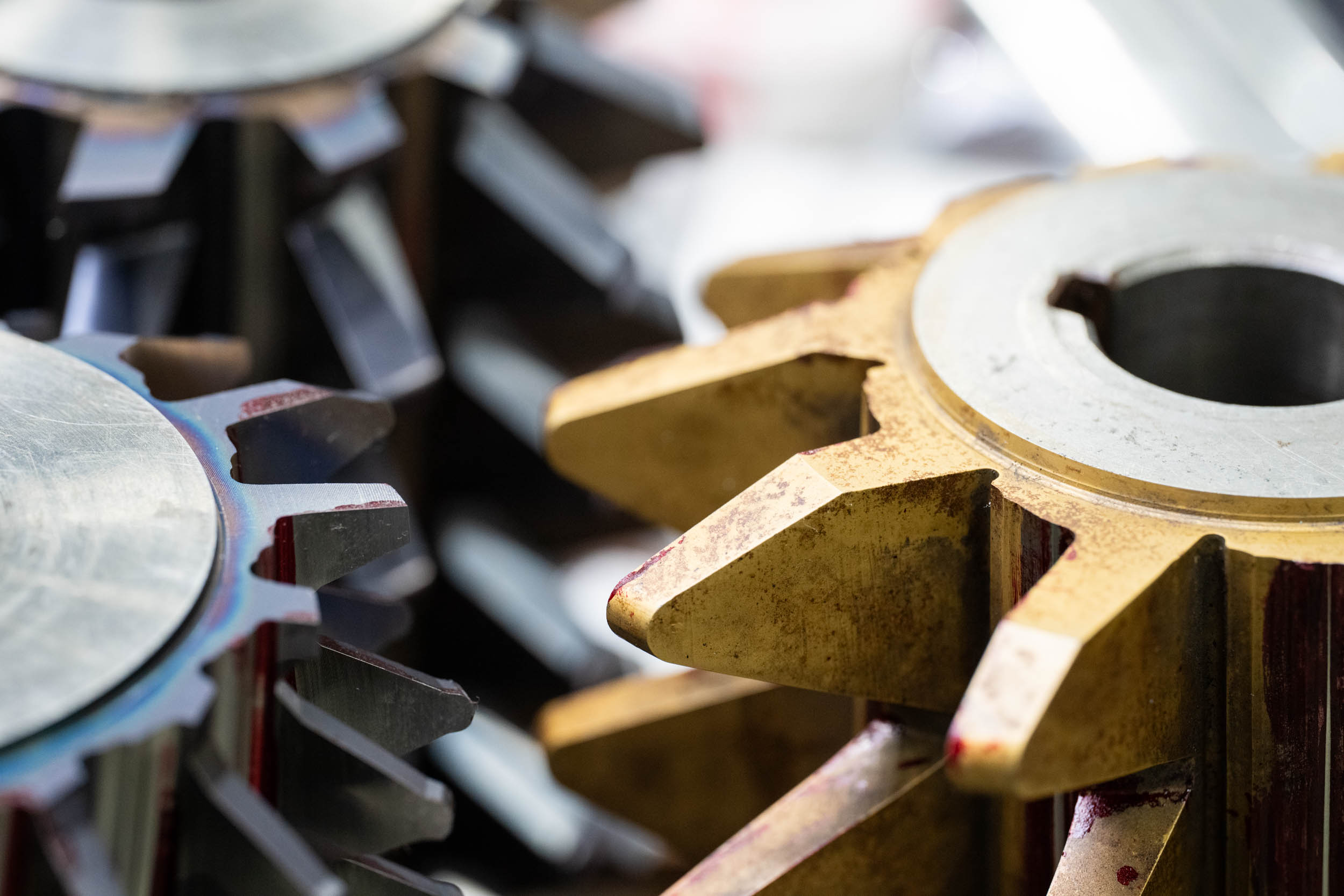

Five coatings we use most often.
Cutting tool coating chemistry has moved through a few generations since TiN arrived in the late 1970s. Here are the five coatings we use most, with the specs Oerlikon Balzers publishes for each.
TiN
Chemistry: Titanium nitride (TiN)
Color: Gold
Hardness: 2,300 HV
Max service temperature: 600°C
Best for: Lower-speed wet cutting, especially with cutting oil, and cost-sensitive jobs
TiN was the first wear-protective PVD coating Oerlikon Balzers introduced, back in 1978, and it's still common across the industry. It's a cost-effective choice for lower-speed wet cutting. It can't take the heat of dry cutting, so it's usually not our first recommendation once a job calls for higher speeds or dry hobbing.

Futura Nano
Chemistry: Titanium aluminum nitride (TiAlN)
Structure: Nano-layer
Color: Violet-grey
Hardness: 3,300 HV
Max service temperature: 900°C
Best for: Dry and MQL cutting at higher speeds
The nano-layer structure gives Futura Nano toughness against the mechanical and thermal stress of higher cutting speeds. Oerlikon Balzers lists dry machining and minimum quantity lubrication (MQL) among its strengths. For dry hobbing specifically, AlCrN coatings have become the first choice, since they hold up to higher temperatures.

Alcrona Pro
Chemistry: Aluminum chromium nitride (AlCrN)
Structure: Monolayer
Color: Bright grey
Hardness: 3,200 HV (40±2 GPa)
Max service temperature: 1,100°C
Best for: Wet, MQL, and dry gear cutting on tools already in service
Alcrona Pro was the standard coating for new hobs for years. Oerlikon Balzers rates it for gear cutting in steel up to 52 HRC, whether you're running wet, MQL, or dry. Its max service temperature, 500°C higher than TiN's, is a big part of why AlCrN coatings became the default for dry hobbing. Balzers has since replaced it with Alcrona EVO, so today you'll mostly see Alcrona Pro on tools already in service.
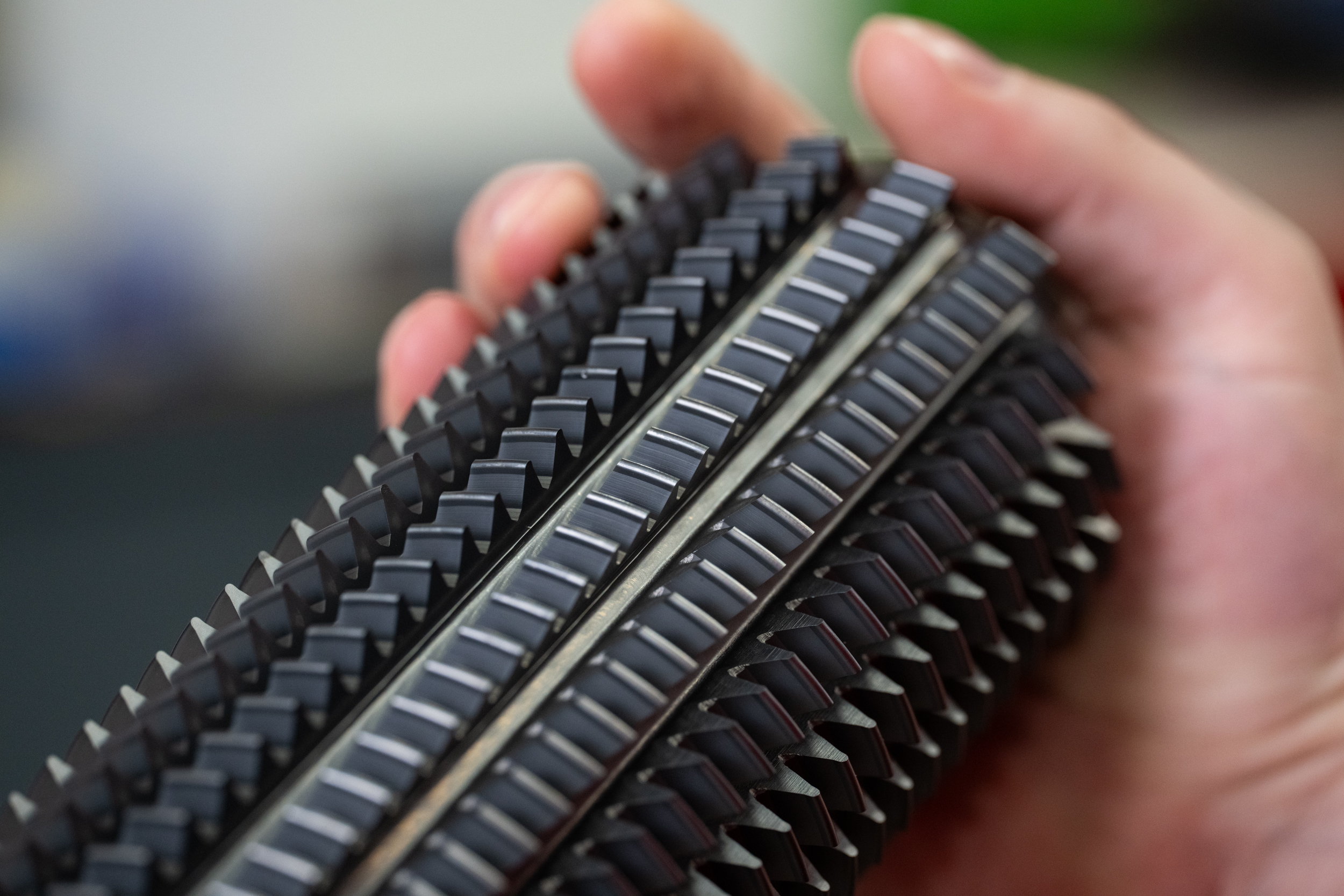
Alcrona EVO
Chemistry: AlCrN-based
Structure: Two-layer
Color: Bright grey
Hardness: 44±4 GPa
Max service temperature: 1,100°C
Best for: Most new tooling, wet or dry, at high cutting speeds
Alcrona EVO is the successor to Alcrona Pro, and it's the coating we specify on most new tools. Oerlikon Balzers reports more than 30% better performance than Alcrona Pro, with higher hardness, lower thermal conductivity, and higher toughness.
That combination holds up in both dry and wet machining at high cutting speeds, and Balzers has tested it on hobs, power skiving cutters, and bevel gear stick blades.

Altensa
Chemistry: AlCrN-based
Color: Dark grey
Hardness: Not published by Oerlikon Balzers
Max service temperature: Not published by Oerlikon Balzers
Substrates: PM-HSS, MC90, and carbide
Best for: High-speed, high-volume gear cutting
Oerlikon Balzers introduced Altensa in 2015 for high-speed, high-productivity hobbing, gear shaping, and bevel gear cutting. Balzers reports it improved hot hardness by more than 20% and abrasive wear resistance by about 35%, with lower thermal conductance.
In Balzers' customer trials against Alcrona Pro, a PM-HSS hob ran 30% faster with 20% longer tool life in dry cutting. Carbide hobs gained more than 30% tool life at high speed, and PM-HSS shaper cutters run wet gained 140%.
Carbide stick blades for bevel gears showed the clearest result. Tool life rose 70% at the original cutting speed, and even after the speed was raised by more than 35%, tool life was still 30% longer.

Compare cutting tool coatings side by side.
Use this chart as a quick side-by-side reference when you're weighing one tool coating against another.
Color is a useful first clue, but shades shift with shop lighting, wear, and resharpening. A coated hob that's been resharpened shows bright ground steel on its rake faces, while the coating stays on the flanks. When it matters, confirm the coating from the tool's records.
Which coating for which job?
Some tool coatings cover a wide range of work, and others fit one job best, as the chart below shows.
Where Helios fits in.
Picking a cutting tool coating isn't a one-time decision, and you don't have to make it alone. Our applications engineers work with you on your cutting tool material, cutting speed, and duty cycle to choose the right cutter coating for the job.

That relationship doesn't stop once a tool ships. Re-coating after sharpening extends tool life the same way the original tool coating did, though strippability and re-coating limits vary by coating. When those steps aren't practical, or don't get the job done, hob reconditioning bundles stripping, sharpening, and re-coating into one process and is worth asking about. New tool or reground one, it's the same dedicated team on both ends of that conversation.
FAQ
What does a cutting tool coating actually do?
It insulates the tool against heat, reduces friction at the cutting edge, and resists wear far better than the bare tool material could on its own.
What's the difference between PVD and CVD cutting tool coatings?
PVD runs under 500°C, cool enough to protect HSS temper. CVD runs closer to 1,000°C, hot enough to soften HSS. Every tool coating in this guide is PVD.
How can I tell which cutting tool coating is on a tool just by looking at it?
Color is a useful first clue. Gold is TiN and violet-grey is Futura Nano. Alcrona Pro and Alcrona EVO are both bright grey, and Altensa runs darker. Since shades shift with lighting, wear, and resharpening, the most reliable way to confirm a coating is to check the tool's records or ask your applications engineer.
Do I need a different tool coating for wet vs. dry cutting?
For dry hobbing, yes. Dry cutting runs the cutting edge far hotter than wet cutting, and AlCrN or TiAlN coatings are built to hold up to that heat. With coolant or cutting oil, any of the five work.
Can HSS tools be coated the same way as carbide?
Yes. PVD's low process temperature makes that possible without re-hardening or distorting the tool.
What's the difference between GPa and HV hardness ratings?
Both measure coating hardness, using different test methods. HV is a Vickers microhardness value, and GPa usually comes from nanoindentation testing. The two don't convert one-to-one, which is why supplier data for these coatings uses both.
Which cutting tool coating should I use for my application?
It depends on what you're cutting, how fast, whether you're running wet or dry, and the tool's substrate, along with what's already worked on similar jobs. Our applications engineers can work through it with you.