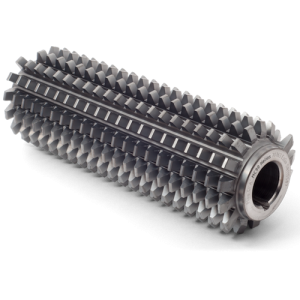
External and internal spline cutting by hobbing, shaping, broaching, form-milling, and power skiving.
A spline shaft transfers rotational movement and force along the same axis by mating a series of external teeth with corresponding internal spaces. External spline profiles can be cut by hobbing, shaping, form-milling, or power skiving, with hobbing offering the best balance of productivity and flexibility.
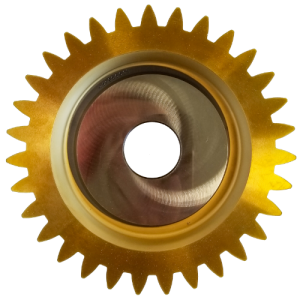
Where hob clearance sweepout is insufficient, shaping is preferred. Internal splines are produced by shaping, form-milling, power skiving, or broaching.

Involute splines, parallel key splines, and spline fits.
Although legacy applications often require parallel key splines, involute splines dominate standards today. Involute splines are commonly designated by two pitches such as 16/32 DP or 24/48 DP, where the tooth is wider than it is tall. The most common pressure angle is 30°. Fit is achieved as either a major diameter fit, where bearing is on the major diameter, or a side fit, where bearing is on the sides of the teeth and the fit is self-centering.


Your technical resource for spline cutting.
Our applications engineers work with your team to evaluate your spline geometry, production volume, and quality requirements and recommend the most efficient cutting method and tooling.
We supply hobs for involute and parallel key spline profiles, including clearance lug hobs, shoulder-type hobs, and elongated-tooth hobs for minor diameter bearing applications. Shaper cutters and broaches are also available for internal spline and shaped external spline applications. We support implementation from the first part through full production.